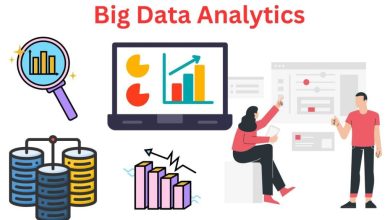
Machine learning, the cutting-edge technology transforming industries worldwide, is at the forefront of data analysis and decision-making processes. From self-driving cars to personalized recommendations, the applications are limitless and continue to shape our future.
Introduction to Machine Learning
Machine learning is a subset of artificial intelligence that focuses on developing algorithms and models that enable computers to learn from and make predictions or decisions based on data. In today’s world, machine learning plays a crucial role in various industries, from healthcare and finance to marketing and transportation.






Everyday Applications of Machine Learning
Machine learning is used in everyday applications that we may not even realize. For example, recommendation systems on streaming platforms like Netflix or Spotify use machine learning algorithms to suggest movies, shows, or songs based on our preferences. Virtual assistants like Siri or Alexa also utilize machine learning to understand and respond to our commands.
- Personalized recommendations on e-commerce websites
- Spam email filters
- Facial recognition technology on smartphones
- Predictive text on messaging apps
Difference Between Traditional Programming and Machine Learning
In traditional programming, developers write explicit instructions or rules for the computer to follow to solve a particular problem. On the other hand, in machine learning, algorithms learn from data to identify patterns and make decisions without being explicitly programmed. This allows machine learning models to adapt and improve over time as they are exposed to more data.
Machine learning algorithms can analyze large amounts of data to find insights and patterns that may not be readily apparent to humans.
Types of Machine Learning Algorithms
Machine learning algorithms can be broadly categorized into three main types: supervised learning, unsupervised learning, and reinforcement learning.
Supervised Learning
In supervised learning, the algorithm learns to map input data to the correct output labels based on a set of labeled training data.
- Real-world applications: Email spam detection, image recognition, sentiment analysis.
- Pros: High accuracy, well-understood and interpretable results, suitable for classification and regression tasks.
- Cons: Requires labeled training data, may overfit if the model is too complex.
Unsupervised Learning
Unsupervised learning involves finding hidden patterns or intrinsic structures in input data without explicit output labels.
- Real-world applications: Clustering customer segments, anomaly detection, dimensionality reduction.
- Pros: Can uncover hidden patterns in data, useful for exploratory data analysis.
- Cons: Lack of objective evaluation metrics, challenging to interpret results.
Reinforcement Learning
Reinforcement learning focuses on learning optimal decisions through trial and error interactions with an environment to maximize a reward signal.
- Real-world applications: Game playing (e.g., AlphaGo), robotics, autonomous driving.
- Pros: Can learn complex behaviors and strategies, suitable for sequential decision-making tasks.
- Cons: High computational requirements, may suffer from instability during training.
Data Preprocessing in Machine Learning
Data preprocessing plays a crucial role in machine learning as it involves transforming raw data into a format that is more suitable for analysis by machine learning models. By cleaning and preparing the data before feeding it into the algorithms, we can improve the accuracy, efficiency, and effectiveness of the models.
Importance of Data Preprocessing
Data preprocessing is essential in machine learning as it helps in:
- Removing inconsistencies and errors in the data
- Reducing computational requirements
- Improving model performance and accuracy
Common Techniques in Data Preprocessing
- Scaling: Standardizing the range of features to ensure all data points have the same scale.
- Normalization: Adjusting the values of features to a common scale without distorting differences in the ranges of values.
- Handling Missing Values: Dealing with missing data by either removing them or imputing values based on certain criteria.
Data preprocessing techniques like scaling and normalization help in standardizing the data, making it easier for machine learning algorithms to learn patterns effectively.
Impact of Data Quality on Model Performance
Data quality significantly affects the performance of machine learning models. Poor quality data, such as missing values or outliers, can lead to biased results and inaccurate predictions. Therefore, ensuring high-quality data through proper preprocessing techniques is crucial for the success of machine learning projects.
Model Evaluation and Validation
Model evaluation and validation are crucial steps in the machine learning process to ensure the effectiveness and reliability of the models developed.
Evaluating Machine Learning Models
When evaluating machine learning models, it is essential to assess their performance based on various metrics to determine how well they are able to make predictions on unseen data. This process helps in understanding the strengths and weaknesses of the models.
Different Metrics for Model Evaluation
- Accuracy: This metric calculates the proportion of correctly classified instances out of the total instances.
- Precision: Precision measures the proportion of true positive predictions out of all positive predictions made by the model.
- Recall: Recall, also known as sensitivity, calculates the proportion of true positive predictions out of all actual positive instances.
- F1 Score: The F1 score is the harmonic mean of precision and recall, providing a balance between the two metrics.
The Importance of Cross-Validation
Cross-validation is a technique used to assess how the results of a model will generalize to an independent dataset. It involves partitioning the data into multiple subsets, training the model on some of the subsets, and testing it on the remaining subset. This helps in detecting overfitting and ensures that the model is robust and reliable.
Supervised Learning
Supervised learning is a type of machine learning where the algorithm is trained on a labeled dataset. This means that the model learns from input-output pairs, making predictions based on the labeled data provided during training.
Examples of Supervised Learning Tasks
- Classification: In classification tasks, the algorithm predicts the category or class that a new data point belongs to. For example, classifying emails as spam or not spam.
- Regression: Regression tasks involve predicting a continuous value based on input features. For instance, predicting house prices based on factors like location, size, and number of rooms.
Role of Training Data and Labels
Training data is crucial in supervised learning as it helps the algorithm learn the patterns and relationships between input features and output labels. The labels provide the correct answers that the model aims to predict, guiding the learning process towards making accurate predictions on unseen data.
Comparison of Supervised Learning Algorithms
- Decision Trees: Decision trees are tree-like models where each internal node represents a feature, each branch represents a decision rule, and each leaf node represents the outcome. They are easy to interpret and understand.
- Support Vector Machines (SVM): SVM is a powerful algorithm that finds the hyperplane that best separates data points into different classes. It works well in high-dimensional spaces and is effective in cases where the number of dimensions is greater than the number of samples.
- Neural Networks: Neural networks are deep learning models inspired by the human brain. They consist of interconnected layers of nodes that process and transform data. They are capable of learning complex patterns and are used in various applications like image and speech recognition.
Unsupervised Learning
Unsupervised learning is a type of machine learning where the model is trained on unlabeled data without any specific guidance. The goal is to find hidden patterns or intrinsic structures within the data without the need for explicit labels. This approach is particularly useful when dealing with large datasets where labeling every data point is impractical or costly.
Applications of Unsupervised Learning
Unsupervised learning has several applications, with two main tasks being clustering and dimensionality reduction. Clustering involves grouping similar data points together based on certain features, while dimensionality reduction aims to reduce the number of variables in a dataset while preserving its important characteristics.
- Clustering: Unsupervised learning algorithms such as k-means clustering can help identify natural groupings or clusters within a dataset. This can be used in customer segmentation, anomaly detection, and image segmentation.
- Dimensionality Reduction: Techniques like Principal Component Analysis (PCA) can help reduce the dimensionality of a dataset by transforming it into a lower-dimensional space. This can aid in visualization, feature selection, and noise reduction.
Common Algorithms in Unsupervised Learning
- K-Means Clustering: This algorithm partitions data points into k clusters based on their distances from the cluster centroids. It is widely used in clustering applications due to its simplicity and scalability.
- Principal Component Analysis (PCA): PCA is a dimensionality reduction technique that identifies the directions (principal components) along which the variance of the data is maximized. It is commonly used for feature extraction and data visualization.
Real-World Examples
Unsupervised learning is beneficial in various real-world scenarios, such as:
- Market Segmentation: Clustering algorithms can help businesses identify distinct customer segments based on purchasing behavior or demographics.
- Anomaly Detection: Unsupervised learning can be used to detect unusual patterns in network traffic, financial transactions, or healthcare data, indicating potential fraud or anomalies.
- Image Compression: Dimensionality reduction techniques like PCA can be applied to compress images while preserving important visual information, reducing storage requirements.
Neural Networks and Deep Learning
Neural networks are a type of machine learning algorithm inspired by the human brain. They consist of interconnected nodes or neurons organized in layers. Each neuron receives input, processes it, and transmits an output signal to the next layer.
Deep learning is a subfield of machine learning that uses neural networks with multiple layers (hence the term “deep”) to learn complex patterns in data. It has revolutionized the field by enabling the development of more sophisticated models capable of solving intricate problems.
Popular Deep Learning Architectures
- Convolutional Neural Networks (CNNs): CNNs are commonly used for image recognition tasks. They consist of convolutional layers that extract features from images and pooling layers that reduce dimensionality.
- Recurrent Neural Networks (RNNs): RNNs are designed to handle sequential data, making them suitable for tasks like speech recognition and language modeling. They have a feedback mechanism that allows them to maintain memory of past inputs.
Natural Language Processing (NLP) in Machine Learning
Natural Language Processing (NLP) is a branch of artificial intelligence that focuses on enabling computers to understand, interpret, and generate human language in a way that is both meaningful and useful. In the context of machine learning, NLP plays a crucial role in extracting insights from text data, enabling applications to analyze, process, and generate text-based information.
Challenges and Techniques in Processing Natural Language Data
- Challenges:
- Ambiguity: Words or phrases can have multiple meanings.
- Contextual Understanding: Understanding the context in which words are used.
- Data Sparsity: Insufficient data for training models.
- Techniques:
- Tokenization: Breaking down text into smaller units like words or sentences.
- Named Entity Recognition (NER): Identifying named entities in text.
- Sentiment Analysis: Analyzing and categorizing opinions expressed in text.
NLP Applications
- Sentiment Analysis:
- Text Generation:
- Machine Translation:
Sentiment analysis involves determining the sentiment expressed in a piece of text, whether it is positive, negative, or neutral. This is widely used in social media monitoring, customer feedback analysis, and market research.
Text generation refers to the process of automatically creating coherent and meaningful text. This can be used in chatbots, content creation, and language translation.
Machine translation involves translating text from one language to another using automated tools. This is essential for breaking down language barriers and enabling communication across different languages.
Computer Vision in Machine Learning
Computer vision plays a crucial role in machine learning by enabling machines to interpret and understand the visual world. It involves extracting information from images or videos to make decisions or take actions.
Common Computer Vision Tasks
- Object Recognition: Identifying and classifying objects in images or videos.
- Image Segmentation: Partitioning an image into multiple segments to simplify its representation.
Popular Algorithms and Frameworks
- Convolutional Neural Networks (CNNs): Widely used for image classification tasks due to their ability to automatically learn hierarchical patterns.
- OpenCV: An open-source computer vision library that provides a wide range of tools and algorithms for image processing and analysis.
- YOLO (You Only Look Once): A real-time object detection system that can detect multiple objects in an image with a single forward pass of the network.
Ethical Considerations in Machine Learning
Machine learning algorithms have the potential to revolutionize industries and improve efficiency in various processes. However, along with the benefits, there are ethical considerations that need to be taken into account to ensure fairness and accountability in the use of these technologies.
It is crucial to address ethical issues such as bias, privacy, and transparency in machine learning models. Bias in algorithms can lead to unfair outcomes, where certain groups of people are favored over others. Privacy concerns arise when personal data is collected and used without consent or proper safeguards. Transparency is essential to understand how decisions are made by machine learning models and ensure they can be explained and justified.
Importance of Fairness and Accountability
Ensuring fairness and accountability in machine learning models is essential to prevent discrimination and ensure that decisions are made without bias. It is crucial to consider the impact of these technologies on society and take steps to mitigate any negative consequences.
- Implementing fairness metrics to detect and address biases in algorithms.
- Providing explanations for the decisions made by machine learning models to increase transparency.
- Establishing clear guidelines and regulations for the ethical use of machine learning technologies.
Examples of Ethical Dilemmas and Solutions
Ethical dilemmas in machine learning can arise in various scenarios, such as using biased data for training models or deploying algorithms that violate privacy rights. However, there are solutions that can help address these challenges and ensure ethical practices in the development and deployment of machine learning technologies.
One example of an ethical dilemma is the use of facial recognition technology that has been shown to have higher error rates for people with darker skin tones. To address this, researchers can improve the diversity of training data and implement bias mitigation techniques to create more accurate and fair algorithms.
Ending Remarks
In conclusion, machine learning stands as a powerful tool reshaping how we analyze data and make decisions, paving the way for innovative solutions across various sectors. Embracing this technology is crucial for staying competitive in the digital era.

Digital content creator with an eye for detail and a focus on trending global topics.